Trying to choose the right part of Downers Grove can feel harder than choosing the right house. One street may offer historic architecture and a walkable village feel, while another gives you mid-century layouts, quieter residential blocks, or easier access to parks and trails. If you want to understand how Downers Grove neighborhoods and housing styles fit together, this guide will help you compare the areas, home types, and trade-offs that matter most. Let’s dive in.
Downers Grove at a glance
Downers Grove is about 22 miles west of Chicago in DuPage County, and the village has three train stations on the Burlington Northern line to Chicago. The U.S. Census Bureau estimates the population at 50,365, with a 75.2% owner-occupied housing rate, a median owner-occupied home value of $449,800, and a mean commute time of 27.8 minutes.
Village planning materials describe most neighborhoods as established and largely stable. They also show that newer or denser housing change is expected to concentrate more in downtown and rail-oriented focus areas than across the village as a whole.
Neighborhood zones buyers compare
Downtown Main Street core
If you want a more walkable, village-center lifestyle, downtown is often the first place to look. The village describes downtown as the heart of the community, with shopping, dining, a busy commuter rail station, historic buildings, and recently completed buildings.
This area tends to appeal to buyers who want easy rail access and daily convenience close to the Main Street station. It also has a structured parking system that supports commuters, visitors, employees, and residents, which reinforces its role as the village’s most active core.
Fairview station area
The Fairview Avenue area is one of the clearest places to watch for change. The village is actively enhancing the area around Fairview station, with goals tied to neighborhood identity, transportation improvements, and mixed-use development.
In April 2025, the village rezoned about 125 properties as part of that effort. For you, that means Fairview may be a strong fit if you want transit access and are open to a setting that may evolve more than older interior neighborhoods.
Historic Maple Main and Prince area
If architectural character is high on your list, the Maple Avenue, Main Street, and E.H. Prince areas deserve close attention. Village historic survey materials identify these streets and districts as key places for older architecture and visible local history.
Queen Anne is the predominant style in the surveyed historic areas, but you will also find Colonial Revival, Craftsman, Prairie, and Mid-Century Modern examples on Maple and Main. In the E.H. Prince subdivision, notable Queen Anne and Foursquare homes help define the area’s older residential identity.
Denburn Woods and Shady Lane Estates
For buyers drawn to postwar suburban design, Denburn Woods and Shady Lane Estates stand out. Village survey materials show these neighborhoods as important mid-century-era areas, with ranch homes especially concentrated in Shady Lane Estates and also present in Denburn Woods.
A 2019 village action item described a Denburn Woods home built in 1964 as Mid-Century Modern. If you prefer cleaner rooflines, simpler forms, and more of a mid-century suburban look, this is an area worth studying.
Housing styles that shape Downers Grove
Bungalows
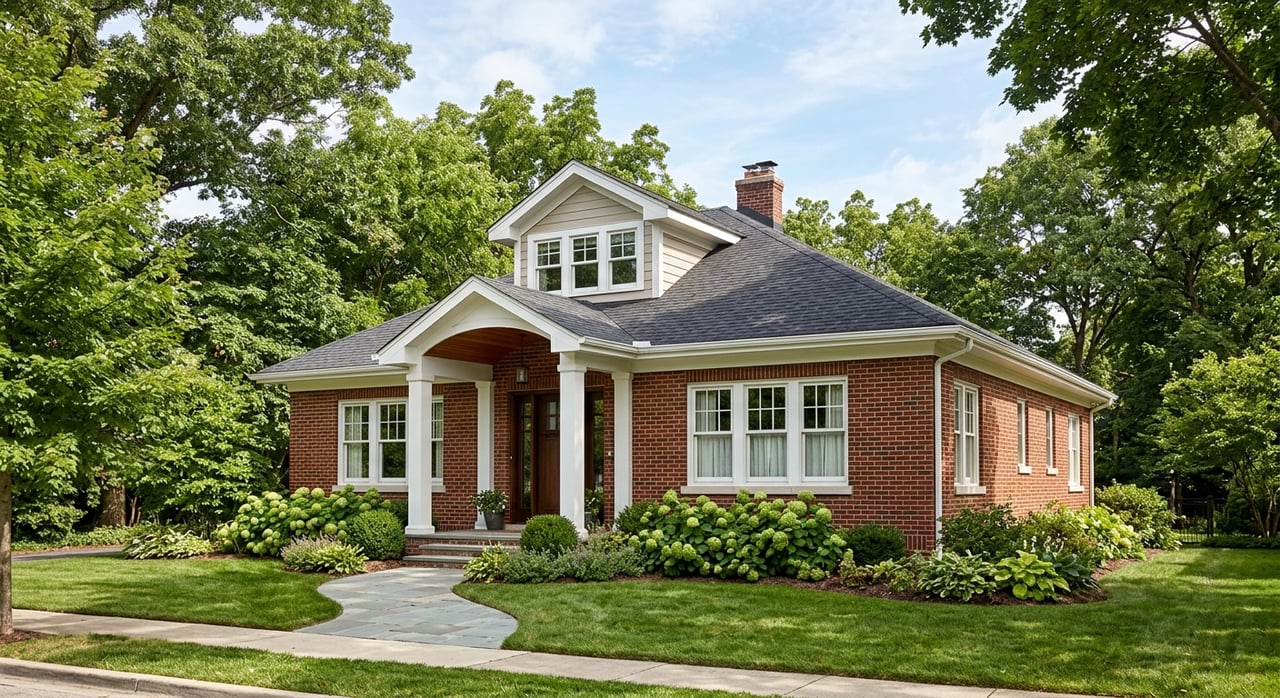
Bungalows are one of the most recognizable home styles in older parts of Downers Grove. The village architectural guide describes them as one- to one-and-one-half-story homes with low gable or hip roofs and porches, and notes that Chicago Bungalows are typically brick.
In Downers Grove, bungalows often show Craftsman or Prairie influences. The village also says Downers Grove has one of the largest collections of Sears homes, helped by railroad sidings that made kit-house delivery easier, so buyers interested in older homes with practical charm will often come across that history here.
Foursquares
Foursquares offer a different kind of historic appeal. The village describes them as square or rectangular two-and-a-half-story homes with hip roofs, dormers, and full front porches.
Many Downers Grove Foursquares include Prairie, Craftsman, or Colonial Revival details. They are especially relevant in the Maple/Main and E.H. Prince areas, where they can offer historic character with a more straightforward, functional floor plan.
Queen Anne homes
If you picture a classic older home with visual detail and a strong street presence, you are likely thinking of Queen Anne architecture. The village guide says these homes are typically asymmetrical, with steep cross-gabled roofs, wraparound porches, and sometimes tower bays or ornate detailing.
This is one of the strongest local styles to know because village survey materials identify Queen Anne as dominant in several of the historic surveyed areas. In practical terms, these homes are often the clearest expression of historic character in Downers Grove.
Ranch homes
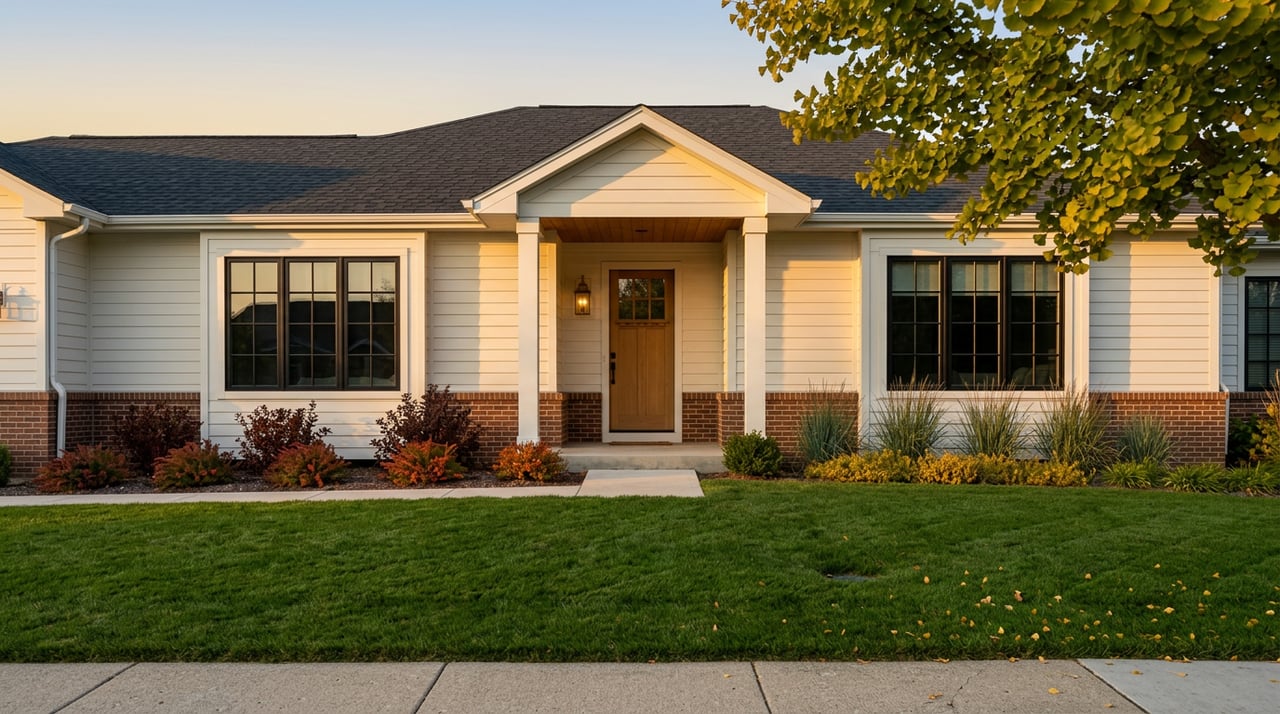
Ranch homes are closely tied to post-World War II suburban development in Downers Grove. The village guide notes that most local ranches exhibit Mid-Century Modern design characteristics.
You will find many ranch homes in Shady Lane Estates, with additional examples in Denburn Woods. If single-level living, simpler massing, and a mid-century feel are important to you, ranch homes may be one of the most useful styles to focus on.
Split-level homes
Split-level homes became popular from the 1950s through the 1970s, according to the village guide. They typically feature a middle-level entry with stairs leading up to bedrooms and down to a family room or basement.
For some buyers, this style offers a practical middle ground between a ranch and a full two-story home. In Downers Grove, split-levels may also include Mid-Century Modern styling, making them a good option if you want distinct living zones without a much larger footprint.
Newer construction and mixed-use housing
Newer housing exists in Downers Grove, but village planning materials suggest it is not a uniform village-wide pattern. Instead, the most visible change is expected in downtown, near Fairview, and in selected mixed-use redevelopment areas.
The village also states that new housing should reflect Downers Grove’s architectural character. So if you are looking for newer residential options or a more modern maintenance profile, your search will likely be more productive near those main centers than in long-established interior neighborhoods.
Commute and daily lifestyle factors
Rail access across town
Downers Grove has three BNSF stations: Main Street, Belmont, and Fairview. Main Street is the downtown station and has 875 parking spaces, while Belmont has 880 parking spaces and Fairview has daily parking in designated lots and street spaces.
Main Street is the most directly tied to downtown amenities. Belmont and Fairview can be useful alternatives if you want train access without being in the busiest commercial core.
Parks, trails, and natural areas
If outdoor access is part of your home search, Downers Grove has a strong park and trail network. The Downers Grove Park District manages almost 600 acres of parks and facilities, and it notes access to more than 145 miles of DuPage County trails.
Lyman Woods includes 150 acres of oak woods, prairie, and marsh, with more than 300 species of native plants and a 19-acre oak woods that has remained undisturbed since 1839. Hidden Lake and Maple Grove are the two forest preserves in Downers Grove, and Prince Pond adds fishing, ice skating, non-motorized boating, and neighborhood open-space appeal.
Tree canopy and neighborhood feel
Many buyers associate Downers Grove with mature trees and established streetscapes, and village data supports that impression. The village says it maintains more than 23,000 public parkway trees and has been recognized as Tree City USA for over 35 years.
That helps explain why many central residential streets feel leafy and settled. If that visual character matters to you, it is worth paying attention not just to the house itself, but to the block and surrounding streetscape.
Practical trade-offs to keep in mind
Historic charm versus renovation flexibility
Older homes can offer standout character, but some properties may come with more oversight for exterior changes. The Village of Downers Grove Historic Preservation Design and Review Board administers landmark and historic-district review for designated properties.
If you are considering a historic resource or a designated property, it is smart to understand that review process early. That does not make these homes less appealing, but it can shape how future exterior updates are handled.
Stability versus change
Most village neighborhoods are expected to remain largely unchanged, according to planning materials. More visible redevelopment is expected downtown, near Fairview, and along selected mixed-use corridors.
That creates a useful decision point. If you want a more settled residential environment, interior historic or mid-century neighborhoods may feel like the better fit. If you want to be closer to the areas seeing the most change, focus on the downtown and rail-oriented districts.
Historic character versus modern convenience
One of Downers Grove’s biggest strengths is variety. You can find bungalows, Foursquares, Queen Anne homes, ranches, split-levels, and newer residential options without leaving the village.
That gives you real choice in how you want to live day to day. Some buyers prioritize architectural authenticity and established streets, while others want newer layouts or proximity to evolving mixed-use areas.
Outdoor access versus station access
In many searches, your ideal home style is only part of the decision. Location relative to rail, parks, trails, and natural areas can matter just as much.
Homes near downtown and station areas may offer stronger walkability and commute convenience. Homes closer to Lyman Woods, Hidden Lake, Maple Grove, or Prince Pond may be more appealing if daily green space and recreation are higher on your list.
How to narrow your search in Downers Grove
If you are comparing neighborhoods in Downers Grove, start with your lifestyle first and your floor plan second. It is usually easier to narrow the right home once you know whether you care most about walkability, commuter rail, historic character, mid-century design, outdoor access, or the potential for newer housing nearby.
From there, look at how each neighborhood’s housing stock lines up with those goals. In a village with largely stable neighborhoods and a few clear areas of change, understanding that match can save you time and help you focus on the homes that fit you best.
Whether you are buying, selling, or trying to position your current home in the market, local context matters. If you want advice tailored to your block, your home style, or the part of Downers Grove you are targeting, the team at The Tully Team can help you make sense of the details.
FAQs
What are the main neighborhood areas buyers compare in Downers Grove?
- Buyers often compare the Downtown Main Street core, the Fairview station area, the historic Maple/Main and E.H. Prince area, and mid-century neighborhoods like Denburn Woods and Shady Lane Estates.
What housing styles are common in Downers Grove?
- Common styles include bungalows, Foursquares, Queen Anne homes, ranch homes, split-level homes, and some newer housing concentrated near downtown and Fairview-focused areas.
Where can you find historic homes in Downers Grove?
- Historic architecture is especially associated with the Maple Avenue/Main Street corridor and the E.H. Prince area, where village survey materials identify Queen Anne, Foursquare, Craftsman, Prairie, and Colonial Revival examples.
Where are ranch and mid-century homes in Downers Grove?
- Ranch homes are mostly found in Shady Lane Estates, with additional examples in Denburn Woods, and both areas are tied to Downers Grove’s mid-century residential development.
Which train stations serve Downers Grove commuters?
- Downers Grove has three BNSF stations: Main Street, Belmont, and Fairview.
What should buyers know about historic homes in Downers Grove?
- For designated landmark or historic-district properties, exterior changes can involve review through the Village of Downers Grove Historic Preservation Design and Review Board.
Where is newer housing and redevelopment most likely in Downers Grove?
- Village planning materials point to downtown, the Fairview focus area, and selected mixed-use corridors as the places where the most visible change and redevelopment are expected.