If you have spent any time watching real estate content online, you have probably seen the house hacking pitch.
Buy a property. Rent part of it out. Let someone else help pay the mortgage. Build equity. Maybe even live for free.
It sounds simple. It also sounds very appealing, especially in a market where affordability is one of the biggest challenges buyers are facing.
But as with most real estate strategies, the internet version is usually much cleaner than real life.
House hacking can be a smart way to buy a home, reduce your monthly housing cost, and begin building long-term wealth. But it is not magic. It is not always easy. And it is definitely not something buyers should jump into without understanding the numbers, the financing, the zoning, and the day-to-day reality of sharing a property with someone else.
As a real estate broker working with buyers throughout Downers Grove, DuPage County, and the western suburbs of Chicago, I think house hacking is worth talking about. Not because every buyer should do it, but because some buyers may be overlooking a strategy that could make homeownership more realistic.
The key is knowing the difference between the hype and the part that actually works.
What House Hacking Really Means
House hacking simply means buying a primary residence and using part of the property to generate income that helps offset the cost of owning it.
That could mean buying a duplex and living in one unit while renting the other. It could mean buying a home with an accessory dwelling unit, sometimes called an ADU, in-law suite, coach house, backyard cottage, or apartment over the garage. It could also mean buying a home that works well for multi-generational living, where family members share housing costs and responsibilities.
The concept is not new. Small multi-family ownership has been around for a long time. What has changed is the way people talk about it and the number of buyers who are considering it because traditional affordability has become so difficult.
The problem is that house hacking is often marketed as a way to “live for free.” That may happen in rare situations, but it is not the standard outcome.
The more realistic goal in 2026 is not to eliminate your housing payment completely. The goal is to make the payment more manageable.
For example, if a property has a total monthly payment of $3,800 and a rental unit brings in $1,600 per month, the buyer is still paying $2,200. That is not free housing. But it may be the difference between a home that feels out of reach and a home that actually works.
That is where house hacking can be powerful.
Why Buyers Are Looking at House Hacking Now
The main reason buyers are paying attention to house hacking is affordability.
Home prices remain challenging for many buyers. Interest rates are not at the extremely low levels buyers saw during the pandemic-era market. Insurance, taxes, maintenance, and utilities all matter. A buyer who looks only at the purchase price is not seeing the full picture.
This is why the house hacking conversation has become more serious. Buyers are not just trying to be clever. Many are trying to solve a real problem: how to buy a home in a market where the monthly payment may be difficult to support on one income or even two.
In my experience, buyers usually do best when they stop thinking about house hacking as a shortcut and start thinking about it as a planning tool.
The question is not, “Can this property make me rich overnight?”
The better question is, “Can this property reduce my housing cost enough to make ownership sustainable?”
That is a much more useful way to evaluate the opportunity.
The ADU Opportunity
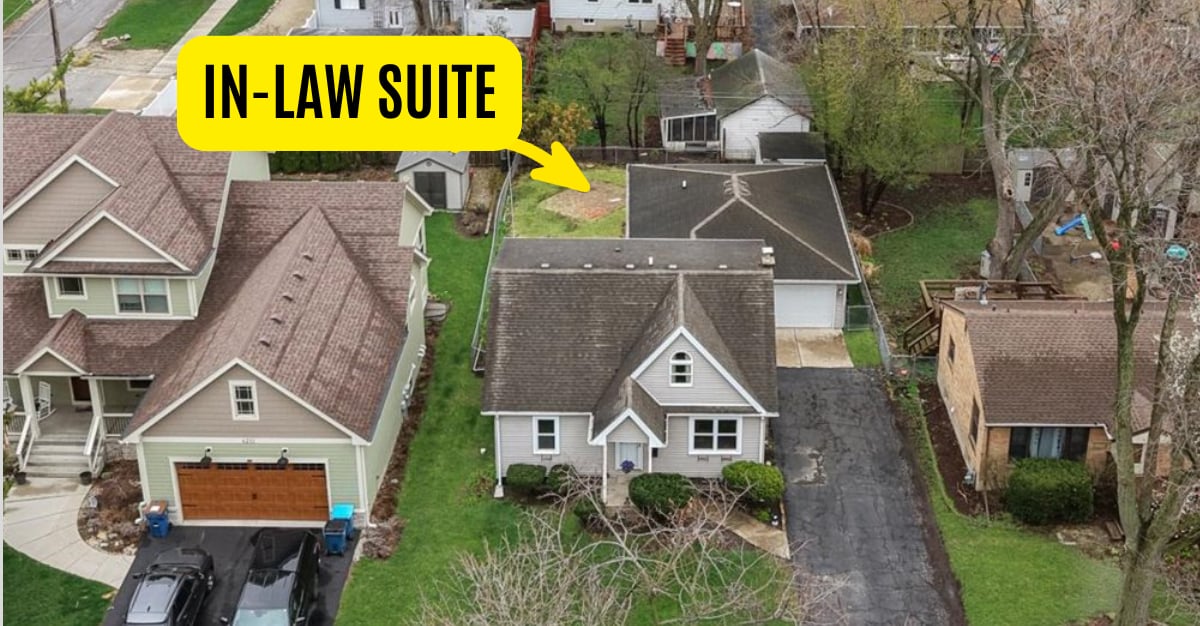
Accessory Dwelling Units, often called ADUs, have become one of the most talked-about versions of house hacking.
An ADU is a secondary living unit on the same lot as a primary home. It might be a detached structure, a converted garage, a basement apartment, or another separate living space with its own functionality.
ADUs are attractive because they can offer flexibility. They may work for rental income, extended family, aging parents, adult children, guests, or long-term planning.
They have also become more relevant because many communities are reconsidering rules around housing density, affordability, and flexible living arrangements. That does not mean every property can have an ADU. It means buyers need to look closely at local rules before assuming anything.
Financing has also become part of the ADU conversation. Fannie Mae made a significant policy update that took full effect in March 2026, allowing buyers to count projected ADU rental income toward their qualifying income when applying for a mortgage.¹ Specifically, lenders can now include ADU rental income on one-unit, owner-occupied purchase transactions, up to 30% of the borrower's total qualifying income.¹
That is a meaningful change because it may help a qualified buyer purchase a home with ADU potential by recognizing the income that unit can generate.
But buyers need to be careful here. Projected income is not the same as guaranteed income. There may be documentation requirements. There may be local restrictions. There may be additional insurance considerations, repair costs, vacancy risk, and management responsibilities.
An ADU can be a great asset. It can also become a problem if a buyer assumes the income before confirming the rules and the numbers.
Multi-Generational Living Is Also House Hacking
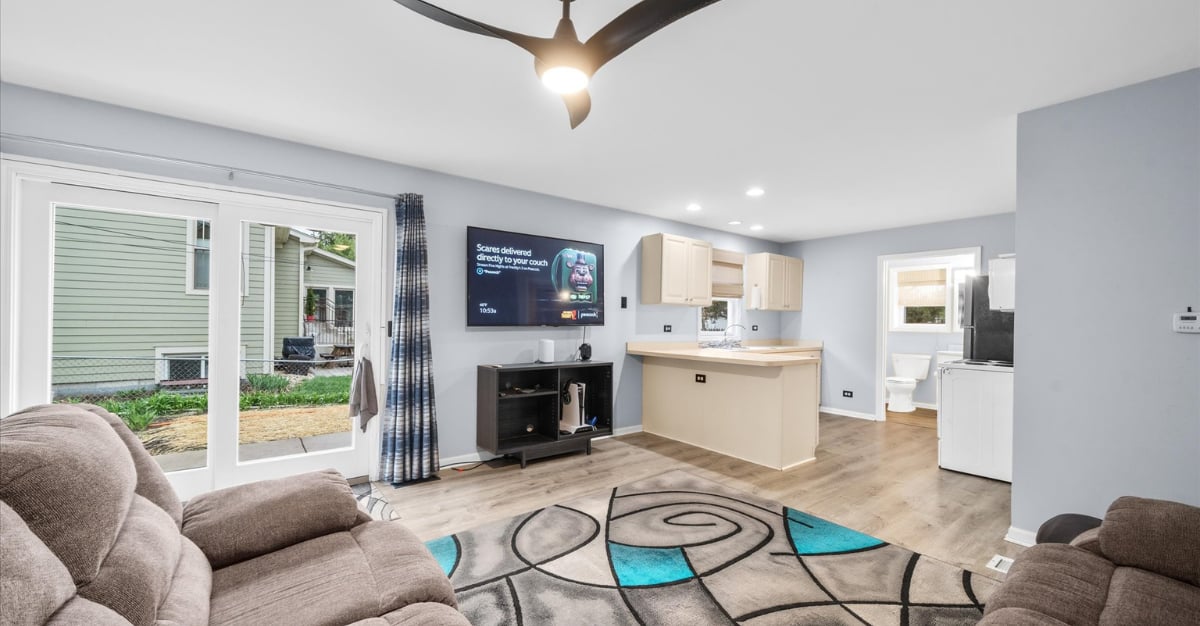
House hacking does not always mean renting to a stranger.
For many families, the strategy is really about sharing a home and sharing costs. That might mean adult children living with parents, aging parents moving in with adult children, siblings buying together, or multiple generations combining resources to afford a better property than they could purchase separately.
This is not a small trend. Multi-generational home buying is a sizable part of the market, with 14% of all home purchases nationally being multi-generational in the last year.² Gen X buyers led the charge, with 19% choosing multi-generational homes.²
That makes sense. Many Gen X buyers are in the middle of two major responsibilities. They may still be helping children while also thinking about aging parents. A home with the right layout can provide privacy, support, and financial relief all at the same time.
Among multi-generational buyers, 41% said the primary reason for their purchase was to care for or support aging parents, the highest share since tracking began in 2015.³ Another 23% said their main motivation was simply to spend more time with their parents.³
This is where real estate becomes very personal.
A home is not just a financial decision. It is also a lifestyle decision, a family decision, and sometimes a caregiving decision. For the right household, a multi-generational property can solve several problems at once.
But the layout has to work. Privacy matters. Bedroom placement matters. Bathroom access matters. Parking matters. Noise matters. Stairs matter. Separate living areas matter.
This is where I think buyers need to be especially honest. It is one thing to say, “We can all live together.” It is another thing to choose a property that actually supports that arrangement long term.
The Classic Duplex, Triplex, or Small Multi-Family
The original version of house hacking is still one of the clearest: buy a small multi-family property, live in one unit, and rent the others.
This can be a duplex, triplex, or four-unit building, depending on the buyer’s financing, comfort level, and market.
FHA loans allow buyers to purchase properties with up to four units with as little as 3.5% down, as long as the buyer occupies one unit as their primary residence. Eligible veterans can go even further with a VA loan, which requires no down payment at all on qualifying multi-unit properties. And for buyers who do not fit either of those boxes, Freddie Mac's Home Possible program allows qualified buyers to put as little as 3% down.⁴
This is why owner-occupied multi-family can be such an important option. A buyer may be able to purchase a property with income potential using financing that is more accessible than many people realize.
But this strategy is not for everyone.
You are not just buying a home. You are becoming a landlord. Even if you only have one tenant, you need to understand leases, maintenance, fair housing rules, tenant communication, repairs, vacancy, and the fact that your tenant may live right next to you.
That does not make it a bad idea. It just means buyers should be honest about whether they want that responsibility.
The Math Has to Be Conservative
The biggest mistake buyers make with house hacking is using optimistic numbers.
They assume the unit will rent immediately. They assume they will get top-of-market rent. They assume there will be no major repairs. They forget vacancy. They underestimate maintenance. They do not budget for updates between tenants.
That is how a good idea becomes a stressful one.
A better approach is to run conservative numbers from the beginning.
Use realistic rent estimates based on comparable local rentals. Budget for vacancy. Budget for repairs. Budget for capital improvements. Think about utilities, landscaping, snow removal, insurance, taxes, and whether the property needs immediate work.
If the numbers only work when everything goes perfectly, the plan is too tight.
If the numbers still work with some vacancy, some repairs, and realistic rent, the property may be worth a closer look.
This is also where local guidance matters. Rental demand can vary dramatically from one suburb to another and even from one neighborhood to another. A property near a train station, downtown area, college, hospital, or major employer may perform differently from a similar property in a less convenient location.
In Downers Grove and the surrounding western suburbs, location, condition, parking, layout, and commute access can all influence rental demand.
Zoning and Local Rules Come First
Before a buyer falls in love with a house hacking opportunity, the property has to be legal for the intended use.
This is non-negotiable.
ADU rules, rental rules, short-term rental restrictions, occupancy rules, and multi-family zoning can vary widely from one municipality to another. What is allowed in one town may not be allowed in the next. What is allowed on one block may not be allowed on another property.
Unpermitted units can create serious problems. A basement apartment that looks functional may not be legal. A converted garage may not meet code. A separate entrance does not automatically mean a unit can be rented. A finished space does not automatically mean it is approved as a dwelling unit.
Buyers should verify before they buy.
That may mean checking municipal zoning, permit history, property records, rental licensing requirements, and whether the property’s current use is legal and transferable.
Skipping this step can be expensive.
Lifestyle Fit Matters More Than People Think
House hacking is not only a financial decision. It is also a personality decision.
Some buyers are perfectly comfortable living near tenants, sharing exterior space, answering maintenance calls, and setting boundaries. Others would hate it.
The same is true for multi-generational living. It can be wonderful when the home is designed well and everyone understands the expectations. It can become difficult if there is not enough privacy, not enough parking, or too much overlap in daily living.
Buyers should ask themselves practical questions before choosing this path.
Am I comfortable being a landlord?
Do I want tenants living on the same property?
How much privacy do I need?
Can I handle difficult conversations?
Do I have the financial cushion to cover the full payment if the unit is vacant?
Would this still make sense if the rental income is lower than expected?
Does the layout actually work for the way people will live?
The answers matter.
Who House Hacking Works Best For
House hacking can be a good fit for several types of buyers.
It can work well for first-time buyers who are facing an affordability gap and need rental income to make a home more manageable.
It can work for buyers who want to begin investing in real estate but are not ready to buy a separate investment property.
It can work for buyers who are willing to live in a property while improving it over time.
It can work for families who need a multi-generational setup for financial, caregiving, or lifestyle reasons.
It can work for buyers who are patient, practical, and willing to think beyond the traditional single-family purchase.
It is probably not a good fit for buyers who want a completely hands-off home, have no tolerance for repairs or tenant issues, or are stretching so tightly that one vacancy would create a financial emergency.
The strategy can be smart, but only when the buyer is realistic.
My Advice to Buyers Considering House Hacking
I would not rule house hacking in or out without looking at the specific property, the specific town, and the specific numbers.
That is the part the internet usually misses.
A house hacking strategy that works beautifully in one market may make no sense in another. A duplex with strong rental demand may be a great fit. A home with an unpermitted basement apartment may be a risk. A property with ADU potential may be valuable, but only if the zoning, cost to create the unit, and expected rent all support the plan.
This is why buyers should slow down and evaluate the opportunity carefully.
The right property can help a buyer reduce housing costs, build equity, and create future flexibility. The wrong property can create financial and lifestyle stress.
A smart house hack starts with good questions, not wishful thinking.
The Bottom Line
House hacking in 2026 is not about getting something for nothing. It is about using a property more strategically.
For some buyers, that may mean buying a small multi-family property. For others, it may mean finding a home with an ADU or creating a multi-generational living arrangement. For others, it may mean deciding house hacking is not the right fit at all.
That is perfectly fine.
The goal is not to chase a trend. The goal is to make a smart real estate decision.
If you are considering house hacking in Downers Grove, DuPage County, or the western suburbs of Chicago, The Tully Team can help you look at the property, the numbers, the local rules, and the practical realities before you move forward.
For questions about buying, selling, or evaluating a house hacking opportunity, contact Shanon Tully, Lead Broker for The Tully Team at Platinum Partners Realtors.
Shanon Tully
Lead Broker for The Tully Team
Platinum Partners Realtors
630.435.3585
[email protected]
www.soldbytully.com
This article is for general informational purposes only and reflects my perspective as a real estate professional. It should not be considered tax, legal, financial, lending, or investment advice. Every buyer’s situation is different, and rules around financing, rental income, zoning, taxes, and property use can vary. Before making a decision, buyers should speak with their lender, attorney, tax professional, financial advisor, and local municipality as appropriate.
Sources
Fannie Mae / Pennymac Announcement 26-25: https://corr.pennymac.com/non-delegated-announcements/announcement-26-25
NAR 2026 Home Buyers and Sellers Generational Trends Report: https://www.nar.realtor/research-and-statistics/research-reports/home-buyer-and-seller-generational-trends
NAR Economists' Outlook – Multi-Generational Homes: https://www.nar.realtor/blogs/economists-outlook/making-extra-room-at-the-table-multi-generational-trends
Redfin – House Hacking: What Is It, and Why Is It So Popular?: https://www.redfin.com/blog/house-hacking/